

Using Equity To Buy Your Next Home
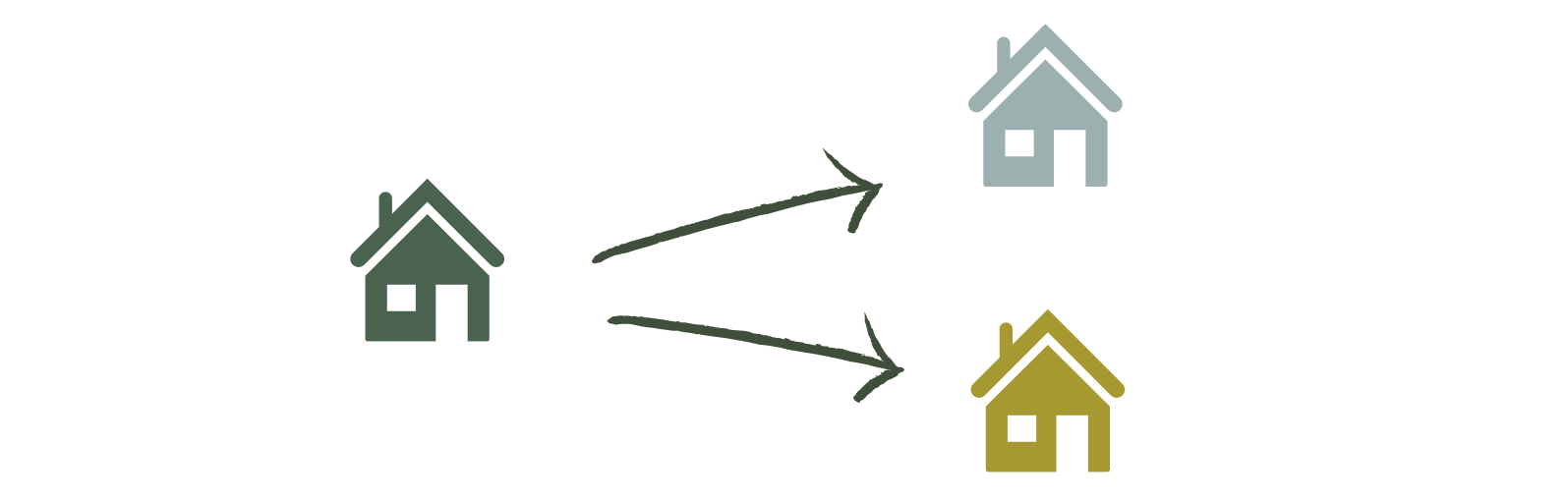
If you're planning to move, you're probably wondering how to use the equity in your current home to buy your next home. If that's you, let's look at the several ways to do this within two primary routes:
Buy First, Then Sell (Buy > Sell)
Sell First, Then Buy (Sell > Buy)
Let's look at Buy > Sell first.
Buy First, Then Sell (Buy > Sell)
Option 1: Contingent Offer
A contingent offer means your purchase is dependent on selling your current home first. The process is very similar to a standard home purchase, but once your offer is accepted, you’ll need to list and and get an offer quickly on your current home. If we’re helping you look at homes on a contingent offer, ideally your current home is dialed and ready to go as soon as you get an offer accepted.
What are the pros of cons of shopping contingent?
A large positive of shopping contingent is that it allows you to shop at your pace. You don’t have to worry if you’ll need temporary housing or if the right home will come to market at the right time like in the approach of selling your home first. The downside of shopping contingent is that it’s not very competitive. It’s a big ask to have a seller sit around while you take your home to market if they have another buyer at similar terms that’s not contingent. Unless a home has sat on the market for a while or we’re in a slow market cycle, it can be hard to get a contingent offer accepted. It’s also a rush launch with your current home. We need to go to market very soon and all the ideal market prep might not be done.
Option 2: Bridge Loan
A bridge loan is a short-term loan that allows you to purchase a new home before selling your current one. Lenders provide funds knowing you’ll repay them with your home’s equity once it sells.
This is a good strategy if you’d like to buy before you sell and you won’t be competitive making a contingent offer. The downsides of bridge loans are that you’ll pay a bit more for using this vehicle and you’ll pay a high interest rate on the amount you’re carrying until you sell your home. Not all lenders do bridge loans. It’s a good tool to have in your toolbox if you need to use it.
Option 3: HELOC (Home Equity Line of Credit)
A HELOC allows you to tap into your home’s equity to fund your next home’s down payment. Local banks are usually great options for exploring HELOC’s. They typically allow you to borrow any additional equity over 20% you have in your home at a floating interest rate based on current market rates. You’re also just paying the interest portion, not principal and interest like a typical mortgage. One downside of HELOC’s are that it’s possible you’ll need an appraisal on your current home if you’re trying to borrow close to the max amount. If you have a lot of equity in your home, we think HELOC’s are a great. It doesn’t cost anything to open a HELOC— you only pay if you borrow money. It’s an open checkbook for when you need it. We have one open on our house.
Sell First, Then Buy (Sell > Buy)
In this approach, you sell your home first and then shop for your next home. To ease the transition, many sellers request up to 60 days of rent-back from buyers, giving you additional time (up to 90 days with a typical 30 day closing period) to find and close on your next home. A rent back period is not guaranteed, but it’s fairly common that it’s offered from buyers if our sellers request it.
What are the pros and cons of Sell > Buy?
The biggest advantage is that we get to decide how and when to go to market. We have the planning and time to dial your home in to put the best foot forward at the right time to market. You also know how much money you’ll be putting in your pocket from the sale to refine your budget for your next purchase. You’re also a competitive shopper as soon as you have an offer on your home. The downside to selling before you buy is that the clock is running for your next purchase. If the home you’d like to purchase is unique, or a more rare product, you might need to land in temporary housing while we search for your next home.
What do I do first?
If you’re considering a move, start out by having us over to give you a valuation on your current home and we can do a walkthrough to provide our recommendations of how to get your home ready to go to market. While some projects are best to leave to the last minute (like yard prep), some projects can be tackled early that will save time and stress for when you’re ready to sell. We can also help you understand what price point you’ll be looking at for your next home based on your location and home parameters. From there, you’ll be able to chat with your lender to explore options to see what approach is best for you between Buy > Sell and Sell > Buy.